Facial rejuvenation
Facial Tightening in Berlin: Facelift or Volume Replacement?
Surgical facelift, volume replacement with filler and other minimally invasive approaches in an honest comparison.

What a surgical facelift changes
Anyone looking for a facelift in Berlin often has different goals in mind: fewer sagging cheeks, a clearer neck and chin line, more volume in the cheeks or better skin structure. However, skin, ligaments, fatty compartments, muscles and bones age in different ways. Facelifts, fillers, biostimulation and energy-assisted procedures are therefore not interchangeable variants of the same treatment.
A facelift, medically called rhytidectomy, is an operation. Depending on the technique, sunken tissue is lifted and repositioned, deeper structures such as the SMAS are treated and excess skin is adjusted. The focus is typically on the lower face, sagging cheeks and often the neck. This can correct tissue displacement more structurally than an injection, but does not stop the aging process or automatically eliminate pigment spots or subtle skin changes.
The possible longer-lasting effect is offset by surgery, anesthesia, scars and recovery time. Possible complications include hematoma, infection, impaired wound healing, noticeable scars and sensory and nerve disorders. Surgical results cannot be guaranteed either.
Volume replacement with fillers is not a facelift
Hyaluronic acid fillers can replenish lost volume and influence contours on the cheek, temple, chin or lower jaw. If the indication is appropriate, the face can appear fresher or more balanced. However, filler does not remove excess skin or retract sunken tissue like surgery. The term liquid facelift is therefore more of a descriptive name than an equivalent replacement for a rhytidectomy.
The advantage is often less downtime and a controllable, time-limited change. Disadvantages include limited shelf life, possible repeat treatments and injection-related risks. These include swelling, bruising, infection, lumps or asymmetry; Rarely, vascular occlusion can lead to tissue damage, visual impairment, blindness or stroke.
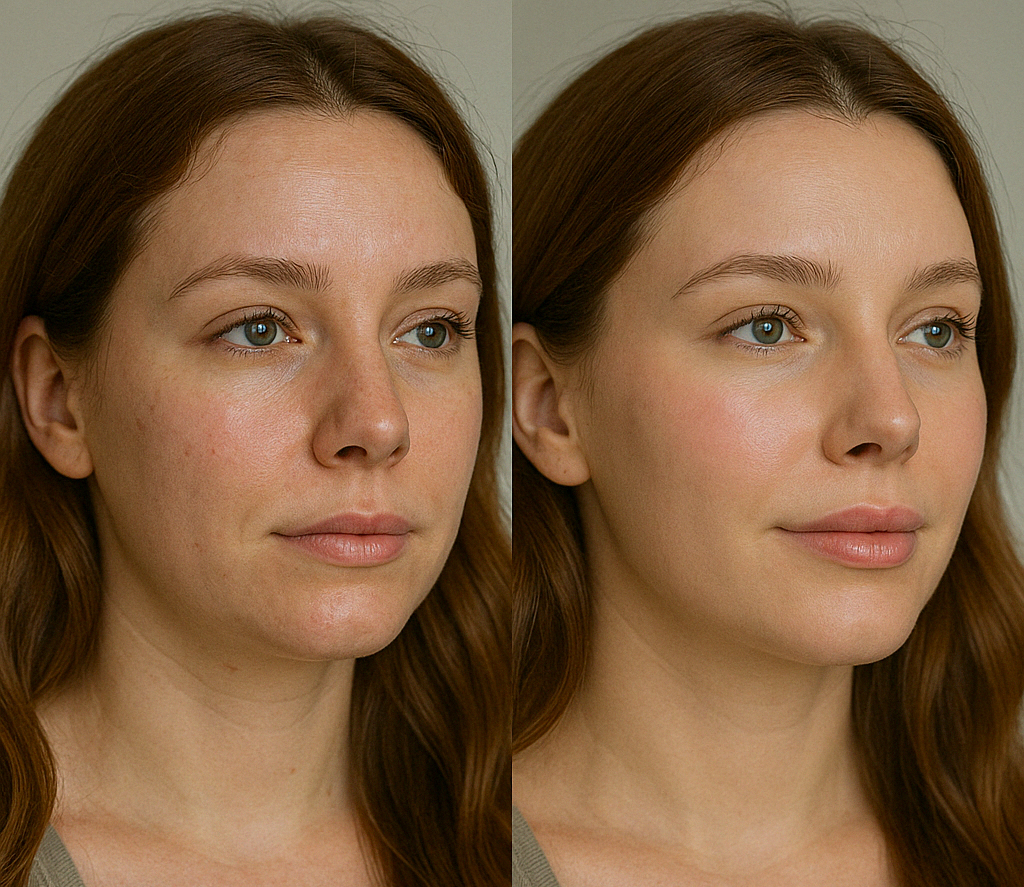
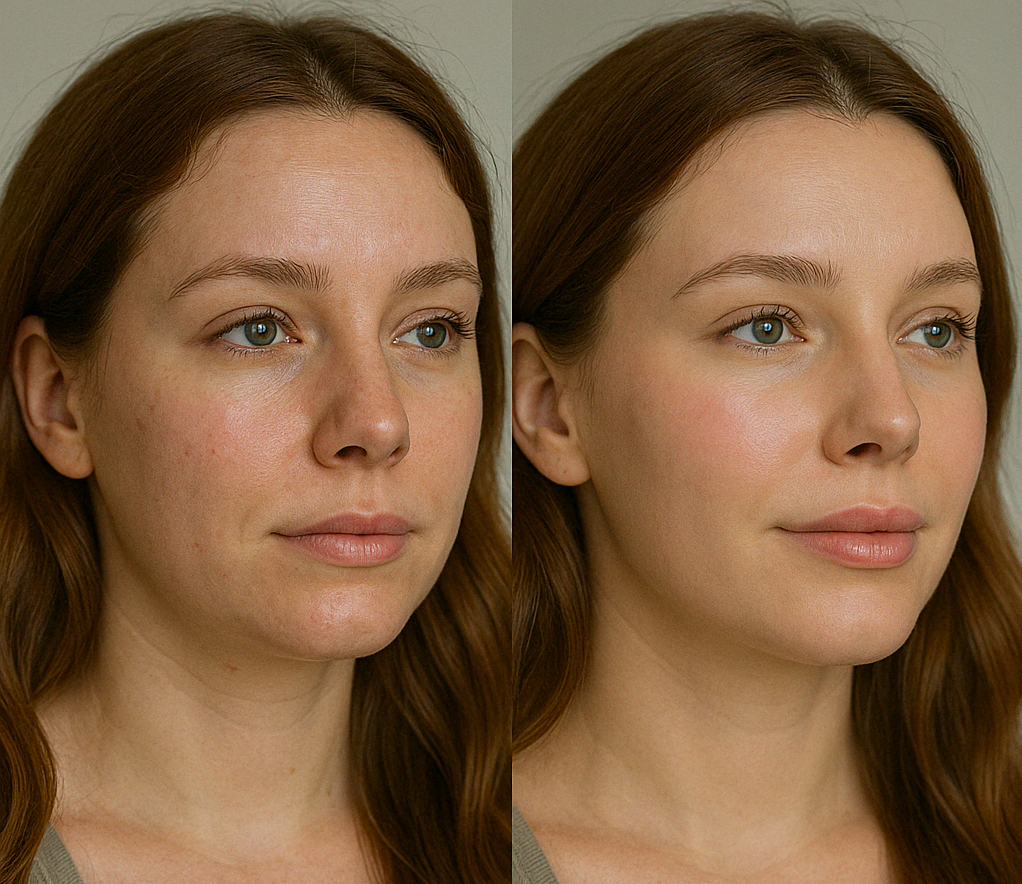
Biostimulation, Botox and energy procedures
Biostimulators such as poly-L-lactic acid or calcium hydroxyapatite are said to influence collagen formation and tissue quality over time. Reviews report possible improvements, but also point out heterogeneous studies and a lack of standardized long-term data. Unlike hyaluronic acid, these materials cannot be dissolved with hyaluronidase.
Botulinum toxin – often referred to as Botox – reduces dynamic muscle activity. It can soften selected expression lines, but does not tighten pronounced excess skin. Depending on the device, laser, ultrasound or radiofrequency procedures can address skin surface or controlled tissue reactions; Expected effects are usually more subtle than with surgery.
Non-operational does not mean risk-free. The FDA warned in 2025 of reported serious complications from certain uses of RF microneedling, including burns, scars, fat loss, disfigurement and nerve damage. The device, indication and experience of the person treating it must therefore be carefully examined.
Which option fits which finding?
If there is predominantly volume loss, a conservative filler plan may make sense; in the case of dynamic wrinkles, possibly botulinum toxin. If the focus is on skin quality or subtle surface changes, selected dermatological procedures can be discussed. Significantly sunken tissue and excess skin are more likely to suggest surgical advice. A staged approach is often possible.
The decision should be made after a medical examination, a complete medical history and information about alternatives, approval status, costs, downtime and follow-up care. Good planning does not first ask about the trendiest device, but rather about the anatomical cause. Reliable advice does not promise a fixed rejuvenation of a certain number of years, but rather explains achievable changes and limits.
Frequently asked questions
Is a liquid facelift the same as a surgical facelift?
No. Filler can add volume and affect contours, but does not remove excess skin or reposition sunken tissue like surgery.
Can Botox tighten the face?
Botulinum toxin affects muscle activity and can weaken certain dynamic lines. This does not eliminate pronounced skin slackening.
Are minimally invasive procedures risk-free?
No. Injections and energy-assisted procedures can also cause side effects and, rarely, serious complications. Medical information remains necessary.
Sources and further reading
Appointment at OM Beauty Berlin
Talk to our medical team
Select your treatment, preferred date and location, then send your request via WhatsApp. Doctolib is available as an alternative for Berlin-Mitte.