Regenerative aesthetics
PRP in Berlin: Autologous Plasma for Skin and Hair
How platelet-rich autologous blood plasma is obtained, what studies show in hair loss and skin and what the limits of PRP therapy are.
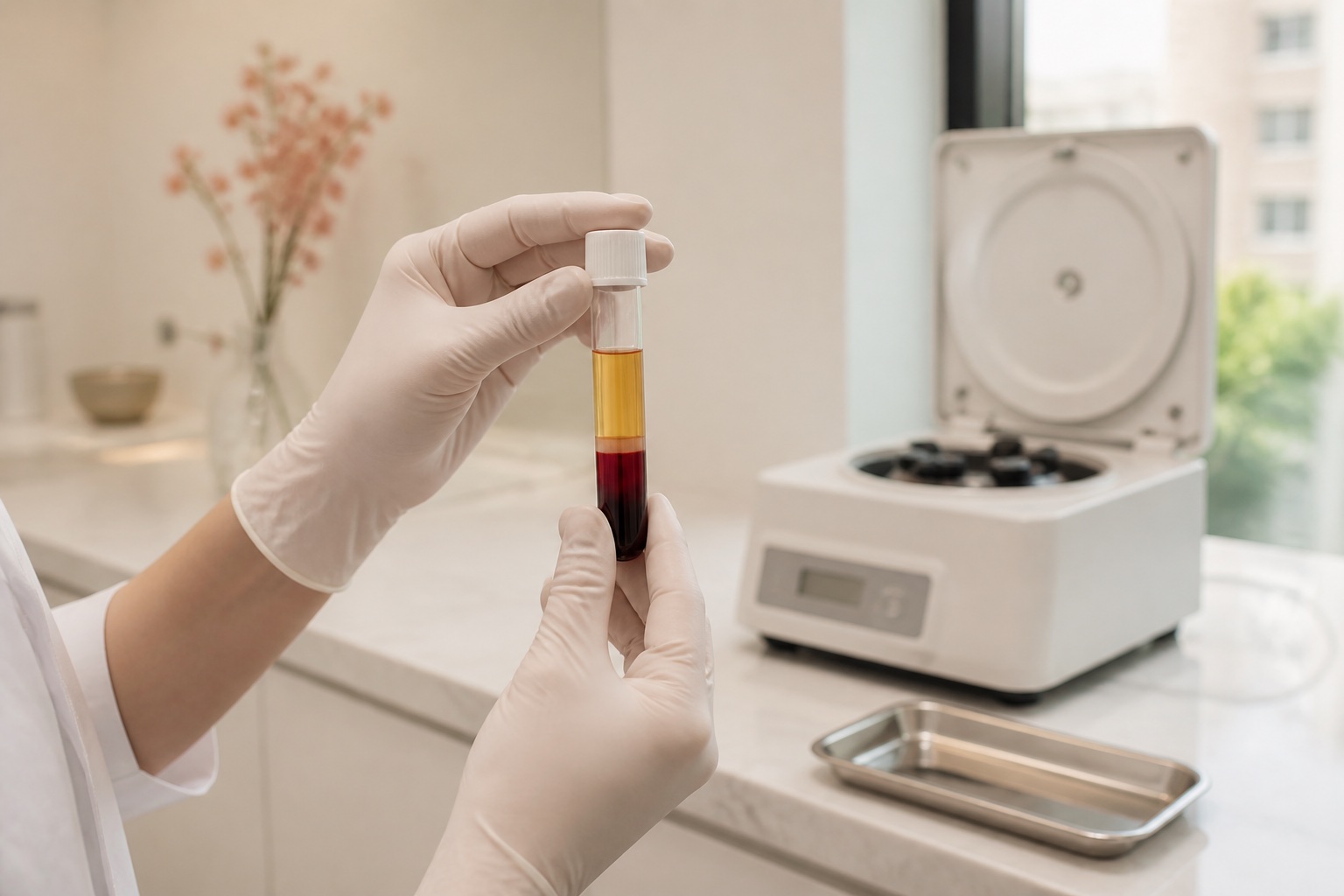
What is PRP or autologous blood therapy?
PRP stands for platelet-rich plasma. To do this, a small amount of venous blood is taken and separated into its components in a centrifuge. The plasma fraction used contains concentrated platelets. It is the body's own material - not donor plasma, a filler or stem cells.
Platelets release messenger substances that are involved in natural repair and wound healing processes. This gave rise to the idea of using PRP in aesthetic medicine and hair therapy. The term vampire lifting is promotional, but medically inaccurate: PRP does not replace surgical lifting and does not reliably build volume like a hyaluronic acid filler.
How does a PRP treatment work?
Before undergoing PRP therapy in Berlin, an anamnesis and medical examination are required. The treatment goal, previous illnesses, medications, bleeding tendency and possible contraindications are discussed. In the case of hair loss, the cause should first be clarified, because androgenetic, diffuse, inflammatory and scarring hair loss require different strategies.
After blood collection, the PRP is processed using a suitable system under hygienic conditions. The application is then carried out with fine injections into the selected skin or scalp region. Slight redness or swelling is possible immediately afterwards. There is currently no generally valid protocol for quantity, distances and number of meetings.


PRP for hair loss and as hair therapy
PRP has been best studied for androgenetic alopecia, i.e. hereditary hair loss. A meta-analysis of 14 randomized studies with 431 participants found, on average, higher hair density after PRP. However, the studies differed greatly in preparation, dosage and treatment regimen; In addition, low quality evidence and possible publication bias were noted.
PRP can therefore be a supplementary hair therapy for selected patients, but success is not guaranteed. It does not create new hair follicles, cannot restore destroyed follicles in cicatricial alopecia and does not automatically replace necessary dermatological treatment or minoxidil, other medications or hair transplantation.
Comparative photos under the same conditions and realistic observation periods over several months are more meaningful than quick promises. Sudden, circular or inflammatory hair loss should be clarified dermatologically before PRP treatment.
PRP for face and skin
PRP is used on the face with the aim of influencing skin structure, elasticity or fine lines. A review from 2024 evaluated 13 systematic reviews. Individual studies reported positive changes or increased satisfaction, but many studies were small, uncontrolled, or combined PRP with laser and other procedures.
The authors rated the evidence predominantly as low to very low and did not consider reliable conclusions on facial rejuvenation to be possible. PRP should therefore be presented as an optional approach that must be examined individually and not as a scientifically proven lifting.
Risks and contraindications
Since the plasma comes from your own blood, the risk of a reaction to foreign donor material is low. However, the treatment is not risk-free. Pain, minor bleeding, bruising, redness, swelling, tenderness or temporary headaches are possible. Rarely, infections, heavy bleeding or tissue irritation can occur.
Active infection, severe platelet disorders, abnormal blood counts, severe bleeding tendencies or unstable hematological diseases should not be treated or should only be treated after specialist medical evaluation. Blood thinners and platelet inhibitors must be indicated, but must never be stopped independently. Purely aesthetic applications are usually postponed during pregnancy and breastfeeding due to a lack of reliable safety data.
PRP is not a plasma pen
Despite the similar name, they are completely different procedures. With PRP, a component of your own blood is prepared and injected. A plasma pen, on the other hand, is an electrical device that generates discharges and targeted thermal injury on the surface of the skin.
Authorities' information on plasma pens lists, among other things, burns, infections, scars, pigment changes and eye injuries as possible risks. The approval and intended application must be checked for the specific device. The risks or principle of action of a plasma pen must not be transferred to PRP autohemotherapy.
Frequently asked questions
How many PRP sessions are necessary?
There is no scientifically consistent scheme for this. The number and intervals depend on the diagnosis, region, preparation and individual reaction. A specific result cannot be promised.
Does PRP help with any form of hair loss?
No. Most of the data concerns androgenetic hair loss. Sudden, circular, inflammatory or scarring hair loss must first be clarified dermatologically.
Is PRP therapy the same as a plasma pen?
No. PRP is extracted from your own blood and injected. A plasma pen works with electrical discharges and heat on the surface of the skin. Mode of action and risks are not comparable.
Sources and further reading
- Meta-analysis of randomized PRP trials in androgenetic alopecia (2024)
- Overview of systematic reviews on PRP and facial rejuvenation (2024)
- Randomized, placebo-controlled PRP trial for hair loss
- American Academy of Dermatology: Diagnosis and Treatment of Hair Loss
- Health Canada: How plasma pens work and risks
Appointment at OM Beauty Berlin
Talk to our medical team
Select your treatment, preferred date and location, then send your request via WhatsApp. Doctolib is available as an alternative for Berlin-Mitte.